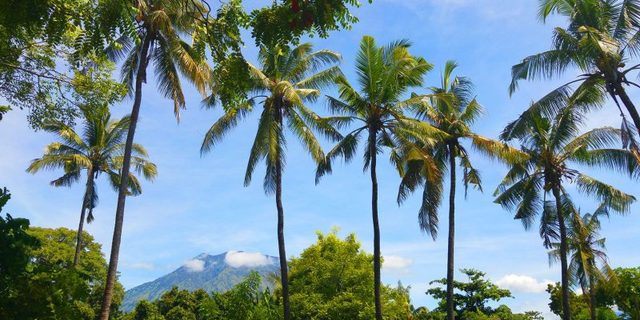
As reported by Kompas, visitors to Bali will notice the lack of low-rise buildings. Unlike other major cities in Indonesia, such as Jakarta or Surabaya, where high-rise buildings are the norm, Bali’s urban landscape is not dominated by tall structures. This reflects the commonly held notion that buildings in Bali should not be taller than a coconut tree.
So, why do buildings in Bali rarely soar to great heights?
Building Height Regulations in Bali
One of the primary reasons for the lack of soaring buildings on the Island of Bali is the building height restrictions in place. These provisions are outlined in the Bali Provincial Regulation (Perda) Number 16 of 2009 concerning the Spatial Plan for Bali Province (2009–2029). Article 95, paragraph (2), letter b, limits the height of buildings utilizing the airspace above ground to a maximum of 15 meters. This regulation serves to preserve the character of Bali’s spatial layout and environment. The regulation document is also recorded in the Bali Provincial Government’s legal documentation network.
However, the 15-meter limit does not mean that every single building must fall below that height without exception. The regulation allows for exceptions regarding public buildings and special-purpose structures that genuinely require a height exceeding 15 meters. Examples include transmission towers, high-voltage power pylons, lighthouses, religious towers, structures for aviation safety, defense and security facilities, and other special structures essential for public safety and security.
Construction projects exceeding these limits must undergo an assessment that considers safety, comfort, and harmony with the surrounding environment, and must be coordinated with relevant agencies.
The Tri Hita Karana Philosophy
Restrictions on building heights in Bali are inseparable from efforts to preserve the spatial and environmental character of the “Island of the Gods.” Bali embraces a concept of life organization that emphasizes balance among humans, nature, and the spiritual realm. One widely recognized philosophy is *Tri Hita Karana*. This concept teaches three harmonious relationships: between humans and God, between humans and one another, and between humans and the environment.
In the context of spatial planning and architecture, this principle is reflected in efforts to maintain a balance between development, the environment, and the cultural values that have evolved in Bali. Consequently, development in Bali takes into account not only spatial needs and building functions but also the character of the surrounding area.
Related Links
Exciting Urban Renewal Underway in Central Denpasar, Bali
Abandoned Taman Festival Park Undergoing Urban Renewal
Enough is Enough: Public Demonstrations in Bali Call for a Tourism Moratorium
Citizen Lawsuit in Bali Condemns President and Governor
Ancient Subak Agriculture System Under Existential Threat
Bali Rice Fields No Longer Available for Villa Construction?
Bali to Ban Building More Hotels, Villas, & Restaurants
Governor Koster: No Moratorium on Hotels & Villas
Escalating Overtourism in Bali
Moratorium on Development: 2 or 10 Years?
Equitable Approach to Tourism Development
Support Grows for 2-Year Bali Moratorium
Time for Moratorium on S. Bali Development?
BTB-GIPI Supports Bali Hotel Moratorium
Megawati Wants Bali Hotel Moratorium
Bali to Limit Number of Foreign Tourists?
Stay Informed on Bali Tourism-Related News: Subscribe to Bali Update