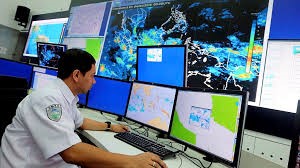
Beritabali and CNN both report that the Meteorology, Climate and Geophysical Agency (BMKG) warns that the unusually cool nights alternating with very hot days can be expected to persist for the coming few months until the arrival of Bali’s dry season.
The BMKG Office for District III in Denpasar depicts the lower-than-normal nighttime temperatures as a “normal” seasonal cycle that occurs each year during the dry season.
Brian Eko Permadi, a weather forecaster at the Denpasar BMKG Office, explains that chilly nights will affect Bali until mid-August. “So, this cold period usually occurs at the beginning of the dry season until its peak. That is, from June, July, to August. The dry season peaks in August, and this cold period will last until August and then end,” said Permadi on Monday. 01 June 2026.
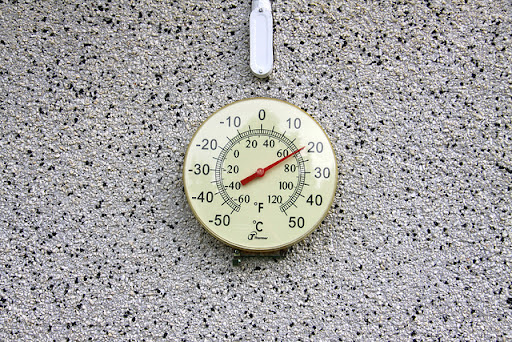
19 Degrees Celsius
Weather observations recorded at the Negara Climatology Station in Jembrana Regency show a minimum temperature of 19 degrees Celsius at night. However, according to the BMKG, temperatures in the Bali highlands are expected to be lower, although official measurement data from that elevated location is not yet available.
”The coldest is 19 degrees. That station is located in Negara’s urban area. In the Bali highlands, there are other highland areas, but we don’t have a recording station for those highlands. So, it’s likely that the highlands may be even lower than 19 degrees,” he added.
The BMKG also doesn’t rule out the possibility that air temperatures could drop even further, especially if the sky is clear and cloudless throughout the day.
”It could still drop, depending on conditions on the ground. So, for example, if there are no clouds at all that day, it’s likely that the night will be even colder. But currently, the recorded lowest temperature is 19 degrees Celsius,” said Permadi.
According to BMKG, the absolute minimum temperature ever recorded in Bali is 16 degrees Celsius, at the Kahang-Kahang Climatology Station in Karangasem Regency.
”According to earlier data, the absolute minimum temperature was recorded at 16 degrees. It’s not extreme; a temperature is considered extreme only if it differs by approximately 3 degrees from the normal temperature. So, for the absolute temperature at that level, it’s not extreme and is still technically normal. So far, it hasn’t qualified as extreme,” he explained.

According to Brian, this year’s cold weather phenomenon arrived a little earlier than usual. While it usually begins to be felt in June, this year saw lower temperatures starting already at the end of May.
”Usually, it’s in June. It just came earlier, at the end of May, starting from the 28th to the 29th,” he said.
BMKG explains that three main factors are causing the cooler air temperature in Bali. The first factor is the lack of cloud cover during the dry season, which means less solar heat is absorbed by the earth’s surface, causing nighttime temperatures to drop more quickly.
”So, only a small amount of heat is absorbed by the Earth. Therefore, at night, temperatures will be cooler than usual. This is because there are no clouds in the morning, afternoon, evening, and night,” he said.
The second factor is the annual motion of the sun, which is currently in the northern hemisphere, while Bali is in the southern hemisphere. This condition reduces the intensity of solar heat received by Bali.
”The third cause is the active Australian Monsoon (or easterly monsoon winds). So, from there, from Australia, there’s a cold air mass, a cold and dry air mass that reaches Bali,” he explained.
BMKG reports that the coldest temperatures usually occur in the early morning, from around 1:00 a.m. to 6:00 a.m. local time.
BMKG recommends that tourism operators and fishermen always maintain their health and endurance by consuming nutritious food, getting enough rest, and taking vitamins. Avoid excessive activity that can cause fatigue, and wear warm clothing at night.
Related Links
Breaking: Mid-Feb Flash Flooding Blamed for 76 Disaster Sites Across Bali.
Poor Land Use Policies Blamed for Bali’s Floods
Stay Informed on Bali Tourism-Related News: Subscribe to Bali Update