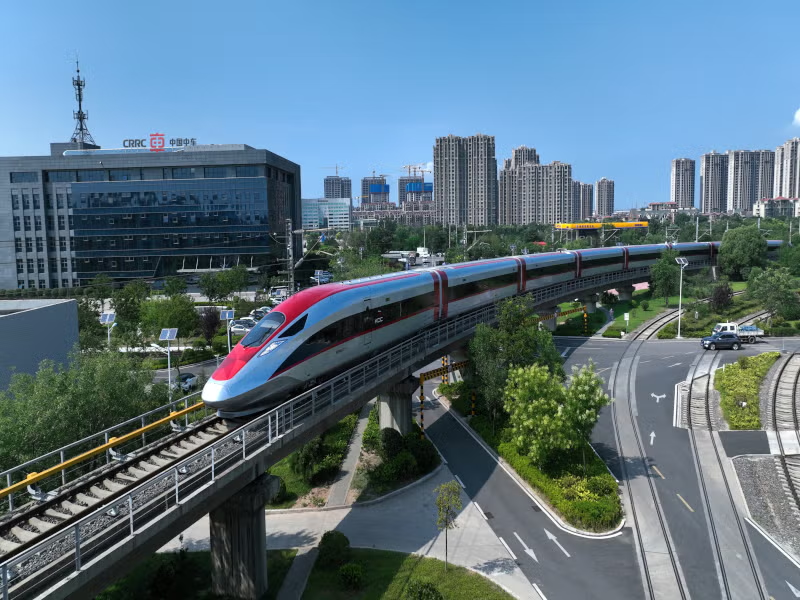
As reported by Kompas, the Indonesian government plans to expand the national railway network to 14,000 kilometers over the coming decades. This program is being prepared as part of a strategy to strengthen national connectivity and enhance railways’ role in the national logistics system.
The expansion of the rail network is also expected to reduce carbon emissions as more goods distribution shifts from road transport to rail. Coordinating Minister for Infrastructure and Regional Development Agus Harimurti Yudhoyono (AHY) stated that the plan follows directives from President Prabowo Subianto. According to AHY, the future railway sector must be capable of meeting freight transport needs in addition to serving as a passenger transport mode. “Railways are crucial for supporting logistics transport; it is not just about people, but also logistics, which we must ensure are better accommodated by the railway sector,” said AHY during the live-streamed Indonesia Zero Emission Heavy-Duty Vehicle Summit 2026 held on Friday, 24 July 2026.
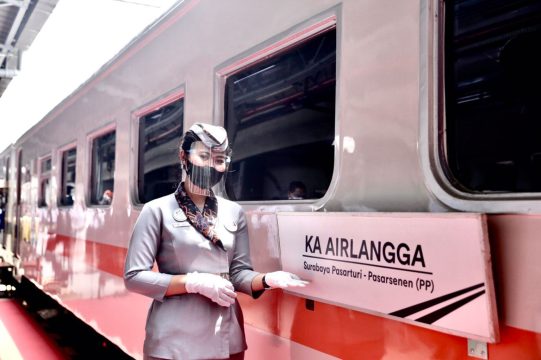
Indonesia’s current railway network spans approximately 7,000 km.
However, the majority of rail infrastructure remains concentrated on the island of Java. To expand the reach of rail services, the government is currently drafting a master plan to construct an inter-island railway network.
”Today, we have approximately 7,000 km of railway tracks, predominantly in Java. Looking ahead, we are formulating a master plan to develop the Trans-Sumatra, Trans-Kalimantan, and Trans-Sulawesi railway systems,” said AHY.
Beyond constructing new lines, the government also plans to reactivate railway lines that have fallen into disuse. According to AHY, this target aligns with President Prabowo’s directive to carry out rail construction and reactivation in stages until the total national network length reaches approximately 14,000 km. Once realized, Indonesia’s railway network length would nearly double its current length.
”This is also in accordance with the directive of President Prabowo Subianto: we must build new lines and/or reactivate existing but currently inactive tracks to reach a total of 14,000 km over the coming decades,” AHY stated.
Japan as a Reference
In drafting this plan, the government is using Japan as a key reference for railway system development. AHY noted that Indonesia shares characteristics with Japan—both are archipelagic nations—making Japan’s experience a valuable reference point.
“If we use a benchmark—Japan, for instance—it is a country with terrain and characteristics similar to Indonesia’s,” he said. He noted that Japan has successfully built an extensive, integrated railway network capable of supporting both public mobility and logistics distribution across its main islands.
“Japan has 14,000 islands, and Indonesia has 17,000, yet they have developed such an extensive railway network that it serves the populations on their main islands,” said AHY. The government hopes that the development of the national railway network will eventually yield similar benefits by streamlining logistics flows between regions.
Beyond enhancing connectivity, the expansion of the railway network is also considered a contribution to efforts to curb carbon emissions. AHY noted that the greater the share of freight transported by rail, the lower the reliance on road-based logistics. This situation is believed capable of reducing greenhouse gas emissions while simultaneously alleviating the burden of heavy vehicle traffic on the roads.
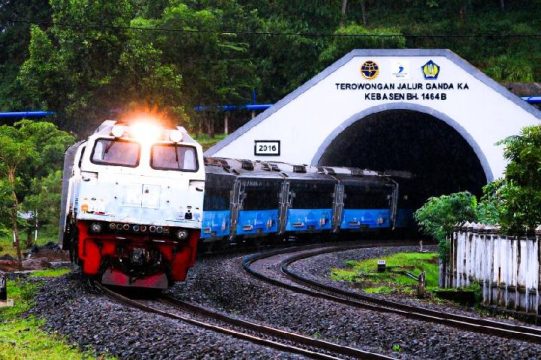
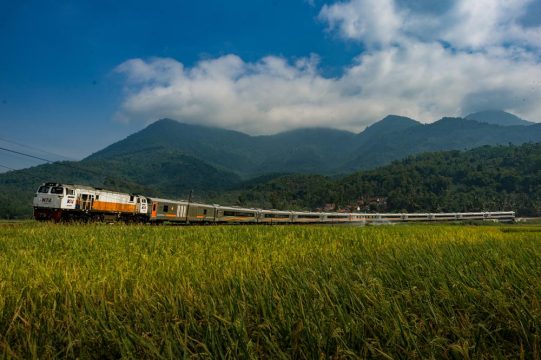
”By developing railways, we can reduce CO2 emissions by 4.2 million tons. Furthermore, we can reduce reliance on roads for logistics transport. It is important that we oversee this together,” stated AHY.
Through the development of the Trans-Sumatra, Trans-Kalimantan, and Trans-Sulawesi networks, the government hopes that the national railway system will become the backbone of a more efficient and sustainable transportation network while also supporting equitable economic growth across regions.
Related Links
Rail System for the Island of Bali
How to Travel Jakarta-Bali for Rp. 200,000
The Official Website of the Indonesian Train System
Stay Informed on Bali Tourism-Related News: Subscribe to Bali Update