NusaBali reports that the Bali Provincial Government’s ongoing efforts to regulate legal status while organizing the Island’s tourism businesses appear to be yielding positive results. This is evident in the growing number of accommodation and tourism businesses—previously lacking permits—now actively initiating the registration and licensing process.
Bali Governor Wayan Koster revealed that between 2025 and 2026, approximately 5,000 villa and tourism business units applied for permits.
According to Koster, this move to secure permits is a direct result of the local government’s regulatory efforts and enforcement measures. Businesses that previously operated without authorization are now entering the licensing process, ensuring that tourism activities proceed in accordance with applicable regulations.
“Those that were previously unlicensed are now obtaining permits. Consequently, during the 2025–2026 period, 5,000 villa and tourism business units have applied for licensing,” Koster stated during the 51st Plenary Session of the Bali Provincial Regional House of Representatives (DPRD) held on Monday, 21 September 2026..
Koster added that this regulatory drive and surge in company registration is also positively impacting occupancy rates at hotels that already hold permits. He noted that licensed hotels are currently experiencing high occupancy levels, reaching 80 to 90 percent daily. “The impact now is that licensed hotels are fully booked; they are at 80 to 90 percent capacity every day,” he said.
Bali’s two-term Governor noted that this trend is also reflected in the disparity in demand between licensed accommodation businesses and those that remain unlicensed. According to Koster, licensed establishments—ranging from star-rated hotels to specific other classes of accommodation—are among the businesses currently attracting a large volume of tourists. “It is (among) the four-star establishments that are seeing high demand; the ‘Melati’ class [budget/non-star rated] and below are not attracting business because they lack permits,” he claimed.

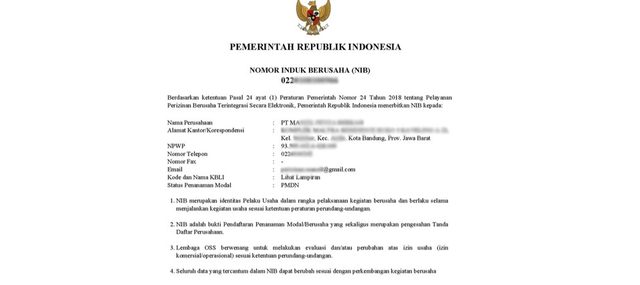
Beyond hotel occupancy rates, Koster noted that the impact of the tourism business restructuring and enhanced business registration is also positively reflected in higher hotel and restaurant tax revenues.
The Governor said that Bali’s hotel and restaurant tax revenue increased by more than Rp 300 billion year-on-year during the corresponding periods of 2025 and 2026. “Secondly, we observe a rise in hotel and restaurant tax revenue—an increase of over Rp 300 billion year-on-year. “Comparing the same periods in 2025 and 2026, it rose by more than Rp 300 billion,” the Governor explained.
According to Koster, three indicators—rising business permit applications, high occupancy rates in licensed hotels, and increased hotel and restaurant tax revenue—show the local government’s growing success in regulating Bali’s tourism sector.
Meanwhile, the government is also encouraging tourism businesses in Bali to operate within the framework of applicable permits and regulations. This regulatory effort aims to bring tourism-sector businesses into a system that allows for oversight and ensures they contribute to regional tax revenue.
Koster earlier emphasized that while the government welcomes investment and tourism business activities, they must comply with the law. Regarding investment and spatial planning, the local government conducts periodic monitoring across all regencies and cities. “We need investment, but the right kind of investment—one that adheres to statutory regulations,” Koster asserted.
He said enforcement measures are being carried out gradually and prudently to ensure rule enforcement proceeds without causing counterproductive effects on Bali’s economic activity. “Firm, gradual, and prudent—so that strict enforcement does not yield negative results or prove counterproductive,” he emphasized.
Related Links
Airbnb Private Villas Being Scrutinized by Bali Provincial Tax Authorities
Anomalies in Bali Tourism – Arrivals Increase as Occupancies Plummet
Bali Hotel Trends: Sanur Strengthens, While Ubud and Other Areas Face Oversupply Issues
Bali to Ban Building More Hotels, Villas, & Restaurants
Anomalies in Bali Tourism – Arrivals Increase as Occupancies Plummet
Bali Hotel Occupancies Dive while Luxury Villas Thrive
Escalating Overtourism in Bali
Stay Informed on Bali Tourism-Related News: Subscribe to Bali Update