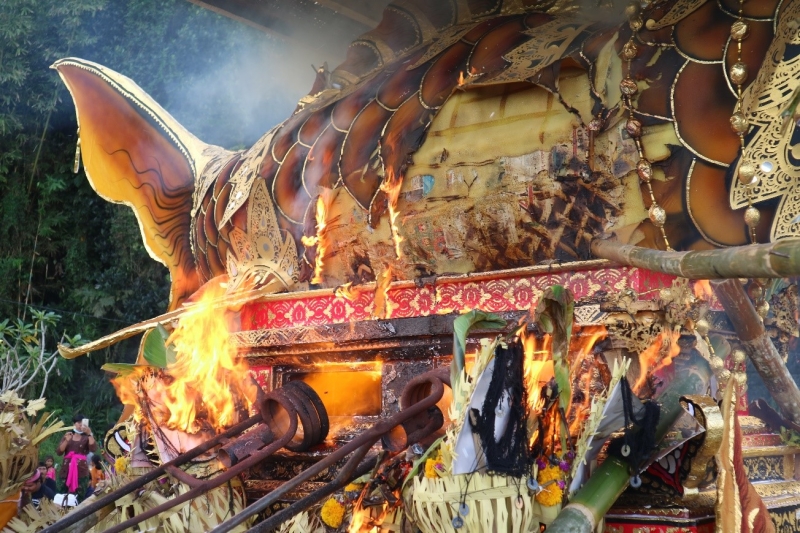
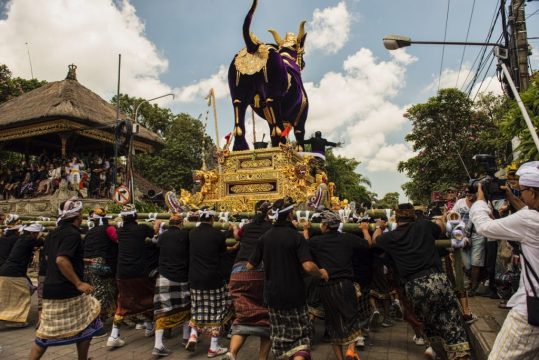
BeritaBali reports that research undertaken by the National Research and Innovation Agency (BRIN) shows that the Balinese are turning in increasing numbers to the use of modern crematoriums instead of the traditional, highly ritualized “Ngaben” funeral processions culminating in the burning of elaborate, magnificent, and costly “bade” (cremation towers).
According to I Made Budiasa, a researcher at the Research Center for Manuscripts, Literature, and Oral Traditions (PRMLTL), which is operated by the National Research and Innovation Agency (BRIN), the final, critically important Balinese rite of passage is undergoing a fundamental change. Budiasa brilliantly dissected the changes underway when speaking during a group discussion titled “Collective Memory, Heritage, and Community,” which was part of the “Doing Critical Island Studies in Southeast Asia” international workshop series held in Jakarta on Tuesday, 14 July 2026.
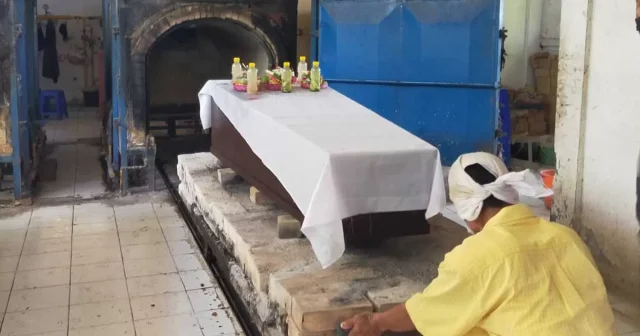
Budiasa explained that Balinese people—particularly the younger generation—now face a choice between preserving traditional forms and rituals passed down through generations or adapting these rites to meet the demands of modern life. His research indicates that a conventional *Ngaben* ceremony costs between Rp. 80 million and Rp. 100 million. In contrast, using a local mechanized crematorium can allow the cremation ritual to be conducted in full compliance with religious requirements for approximately Rp. 32 million.
”The younger generation tends to be more open to using crematoriums. This choice does not signify a lack of respect for ancestors; rather, it is an adjustment that enables families to fulfill religious obligations without compromising other essential needs, such as their children’s education. This reflects a dynamic scholars now term as the ‘religious marketplace’—a situation where religious practices and services adapt to the needs, preferences, and socio-economic conditions of modern society,” Budiasa said.
Budiasa added that urbanization is another factor driving this shift. Many Balinese people living in urban areas face time constraints due to work demands and can no longer fully participate in routine *ngayah* (communal service) traditions demanded in traditional villages. Young Balinese men and women pursuing careers in modern hotels and tourism attractions find it highly problematic to abandon their work schedules at a moment’s notice to attend and participate in the multi-day cremation rituals of family, friends, and neighbors. Under these circumstances, crematoriums offer a solution that allows Hindus to perform the *Ngaben* ceremony properly without diminishing the spiritual significance inherent in the ritual.
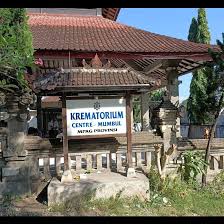
According to Budiasa, for some Balinese people, *Ngaben* is not merely a procession to send the soul to the realm of the ancestors; it is also an act of familial devotion long associated with social prestige.
”A conventional *Ngaben* ceremony requires extensive preparation, the involvement of many people, and significant expense. Shifts in modern lifestyles have prompted some community members to seek more time- and-cost-efficient ways of performing these ritualistic obligations,” he explained.
Beyond saving time and money, crematoriums are seen as meeting the needs of urban residents who face land constraints, high mobility, and demanding work schedules. For the younger generation, utilizing a crematorium offers a way to adapt to changing times without abandoning religious obligations toward their ancestors.
The discussion organized by PRMLTL BRIN in collaboration with the Faculty of Humanities at the University of Indonesia (FIB UI) highlighted that the use of crematoriums represents more than just a technical change in ritual execution; it also reflects shifts in values, cultural practices, and how the community interprets ancestral heritage amidst the dynamics of modern life.
Adapting Tradition to Changing Times
Commenting on the research findings, Prof. Melani Budianta—a member of the Indonesian Academy of Sciences (AIPI) and a Professor Emeritus at the Faculty of Humanities, Universitas Indonesia (FIB UI)—observed that the use of crematoriums demonstrates the Balinese community’s ability to adapt to technological advancements without abandoning cultural and spiritual values.
”This situation represents a technological leap that brings efficiency to the performance of customary rituals. The shift from open-air cremation to enclosed crematoriums is a cultural innovation that does not strip away the philosophical essence of *Ngaben*. While the medium has changed, the spiritual significance remains intact. In fact, this modern approach has the potential to be more environmentally friendly. The challenge ahead lies in understanding how the community continues to perceive the sanctity of the ritual amidst social change and modernity,” said Melani.
The research indicates that the transformation of *Ngaben* practices in Bali is not merely a technical change but part of a process of reconciling tradition, religious teachings, and technological progress with the community’s social and economic dynamics. These findings illustrate how Balinese cultural heritage evolves with the times while preserving the spiritual values at the heart of the *Ngaben* ceremony.
Related Links
Heaven-bound in a Blazing Pick-Up Truck
Mass Cremation Tragedy Claims a 3rd Life
Bali is My Home: Balinese Cremations
Bali Cremates 30 Unclaimed Bodies
Shades & Watch Cremated with Favorite Son
Striking Video on Youtube of Cremation Rites for Wayan Aries Setiawan
Stay Informed on Bali Tourism-Related News: Subscribe to Bali Update