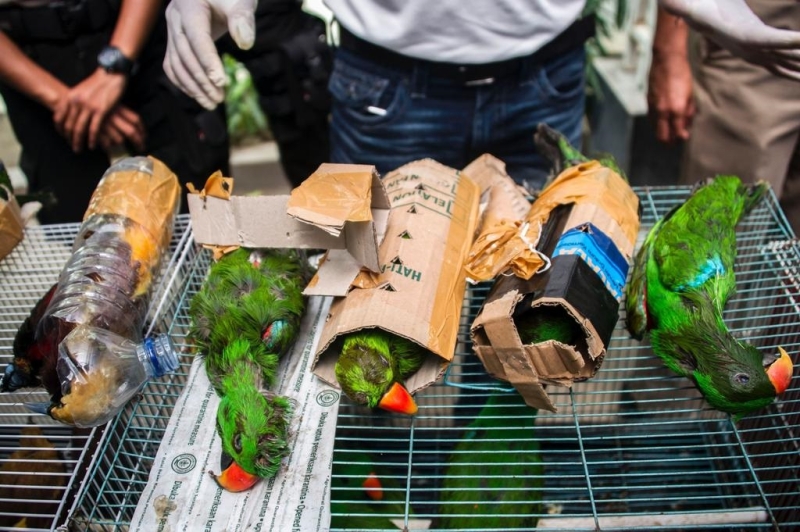
As reported by BeritaBali, records kept by the not-for-profit group (NGO) FLIGHT show that Bali recorded the highest number of wild bird seizures in Indonesia, totaling 10,739 birds in just five months of 2026 (January-May).
FLIGHT was established in 2018 to monitor and oppose the illegal trade of songbirds in Indonesia. Every year, millions of birds are stolen from the wild to meet market demand, pushing many species toward local extinction.
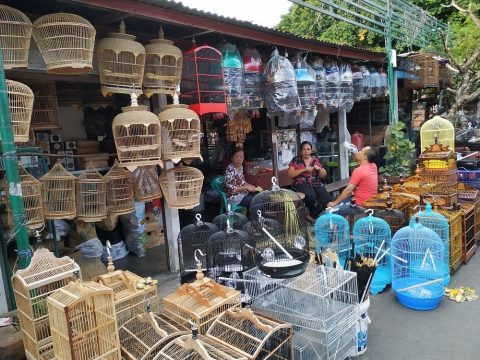
Bali Bird Market
FLIGHT takes a direct, holistic approach by engaging its members and pressuring Indonesian authorities to investigate violations and enforce laws protecting threatened bird species. The organization also dedicates itself to educating the general public and local communities about the importance of protecting and conserving birds.
Registered as a non-profit conservation organization under the Indonesian Ministry of Law and Human Rights, FLIGHT is dedicated to ensuring that Indonesia’s wildlife remains where it belongs – in the wild.
FLIGHT maintains a record convincingly demonstrating that Bali is part of a major trade route for the illegal bird trade. Padangbai Port, the eastern Bali seaport and ferry crossing point, is the main entry point for the smuggling of birds from Lombok, West Nusa Tenggara (NTB).
Approximately 10,500 birds were confiscated by law enforcement authorities at this port in the first five months of 2026.
The ferry port of Gilimanuk on the west coast of Bali serves as the transit point for smuggling to Java and the Port of Ketapang, only 5 kilometers away on the coast of East Java.
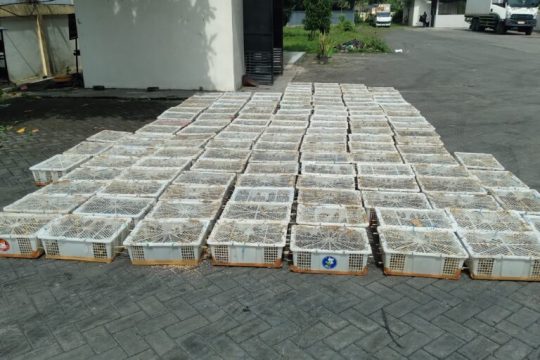
Indonesian authorities seized 134 boxes of songbirds Banyuwangi, East Java.
Marison Guciano, FLIGHT Director, stated that the illegal bird trafficking network operates in a highly organized, professional, and sophisticated manner. There have been frequent cases of information about seizures leaking, with perpetrators shifting cargo or turning vehicles around when they notice officers on duty at the port.
”The perpetrators even utilize CO2 chambers located under ferries to hide the contraband,” the FLIGHT director said on Monday, 15 June 2026, during a media gathering titled “Bali: Between Main Route and Black Market for Illegal Wildlife Trade” held in Denpasar.
In addition to being a main stop on the illegal trade route, Guciano also said that Bali is a source of wild birds traded illegally through Facebook groups and physical markets like Pasar Satria in central Denpasar. Morison emphasized the importance of learning from the cases of the Bali Starling and the Bali Akat, where birds that had been extirpated in the wild had to be repatriated from overseas captivity.

Bali Starling
He explained that this massive trade is driven by extremely high demand, especially on the island of Java, where there are around 11,100 bird stalls and 125 bird markets.
”Illegally taking birds from the wild is considered the cheapest and easiest method compared to captive breeding, which is time-consuming and expensive,” he lamented.
Furthermore, in Java, the philosophy of keeping a captive “kukilo” (bird) is considered one of the five perfections (Limo Perkara) of a true man’s life, symbolizing hobby, pleasure, and patience. However, the problem is that the hunting process generally uses a mixture of rubber latex and rat glue, resulting in many birds dying before they even reach the market. Only a small fraction of the birds that end up sold at the market survive the hunting and shipping process.

Ratna Hendratmoko, BKSDA Bali Chief
The impact of this illegal trade has led to many bird species becoming locally extinct in the wild. Wild bird populations continue to decline massively due to the population crisis caused by this trade. Between 2023 and 2025, there were 771 wildlife confiscation cases, resulting in the seizure of 16,192 live birds. Of this number, wild birds dominated, accounting for 86.32%, and 96.20% of these were songbirds.
He stated that this massive illegal trade poses a zoonotic risk – namely, the transmission of diseases from wild animals to humans, which makes the Balinese people highly vulnerable. Furthermore, the decline in the insectivorous bird population will disrupt the food chain, leading to a surge in insect populations that could threaten the local agricultural sector.
The Head of the Bali Natural Resources Conservation Agency (BKSDA), Ratna Hendratmoko, emphasized the importance of building collective awareness that leads to collective action. “How to create collective awareness leading to collective action?” he asked.
This collective awareness, Ratna said, is to be achieved not by coercion or fear of punishment. For the Bali BKSDA, law enforcement is a last resort. Law enforcement, said the man more commonly known as Moko, should target the highest level of the network, the intellectual actors. The victims who have been arrested so far have been couriers who were unaware of what they were carrying, whether these animals were protected or not.
”Of course, this becomes homework for all of us, and how we uncover the intellectual actors, the greedy ones,” he said.
Related Links
FLIGHT Website
Nature Conservation Agency (KSDA) Outlaws Elephant Rides In Indonesia
Rehabilitated Dolphins Now Back in Bali Sea
Endangered Bali Starlings on the Comeback
Bali Mynah: Age of Bali Miracles
Stay Informed on Bali Tourism-Related News: Subscribe to Bali Update