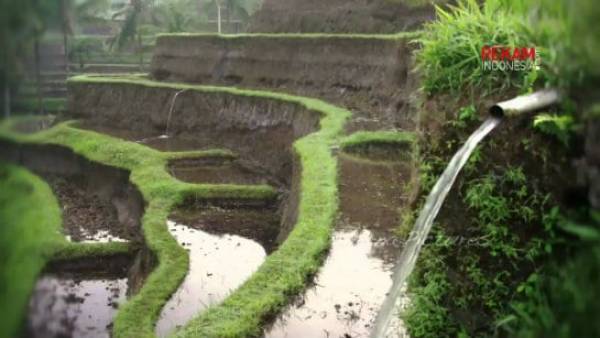
Subak is Bali’s ancient water management system. Its hierarchy of rules and relationships dates back to at least the 11th century and has maintained water flow, regulated planting patterns, and become an integral part of Balinese life.
Kompas.com recently published an informative article on Bali’s ancient “subak irrigation system.” The official website of Buleleng Regency describes “Subak” as a farming community organization that manages traditional rice-field irrigation systems.
The Subak Irrigation System not only manages water distribution but also serves as the physical embodiment of the Tri Hita Karana philosophy, the long-standing guiding principle for the Balinese people. Tri Hita Karana comes from the word “tri,” meaning three, “hita,” meaning happiness or well-being, and “karana,” meaning cause.
Tri Hita Karana is the Balinese tenet that balance must be maintained across three levels of happiness and well-being: a harmonious relationship between humans and God (parahyangan), a harmonious relationship between humans (pawongan), and a harmonious relationship between humans and nature (palemahan).
Historical references to subak date back to the 11th century. The term subak was first recorded in Tabanan, West Bali, in 1072 AD, at Pandak Band at Pandak Bandungung. In that inscription, subak refers to a social and religious institution that regulates the use of irrigation water for rice fields.
For the Balinese people, subak represents much more than simply an irrigation system. Subak is also a way of life that prioritizes unity and community values. Water distribution is carried out in a fair and equitable manner, achieved through deliberation among farmers. Various decisions, from planting times to the specific types of rice to be cultivated, are made by deliberative consensus. If there is a violation of the agreed rules, sanctions are also determined through mechanisms within the subak organization, related to the implementation of rituals at the temple and to participation in critical rites of passage. Subak members, known as “krama subak,” are farmers who own rice fields and receive a share of irrigation water. In practice, “krama subak” is divided into three groups, namely “active” krama who are directly involved in all subak activities, “passive” krama who replace their obligations with money or in kind due to certain conditions, and “krama luput” who do not participate in subak activities because they carry out certain duties, such as village head or traditional bendesa. The subak organization is led by a pekaseh or kelian, who serves as its head. The management is also complemented by a pangliman or petajuh as a representative, a peyarikan as secretary, a petengen as treasurer, and an information delivery officer known by several names, such as juru arah or kasinoman, as well as stakeholders responsible for performing religious rituals.
Within the subak, there are also several working groups, or sekaa, each with distinct duties and responsibilities. There are groups assigned to cultivate land, regulate water flow, monitor irrigation channels used for water distribution, detect water theft/loss, plant rice seedlings, weed, harvest, and transport the harvest to the barn.
As an independent organization, each subak has its own set of rules called awig-awig, sima, and pararem. These rules outline the rights and obligations of members, organizational governance, and sanctions for violations. All provisions, of course, remain based on the values of Tri Hita Karana.
A subak irrigation system can comprise a network of dams, main canals, branch canals, and small canals that channel water to each rice field. All of these facilities are built, maintained, and managed cooperatively by subak members.
In addition to regulating agricultural issues, each subak is also closely linked to the religious life of the Balinese community. Generally, each subak has a Pura Ulun Carik or Pura Bedugul as a place of worship for Dewi Sri, the goddess of fertility and prosperity. The subak Kelian (chief) is tasked with overseeing the system’s management, a role performed voluntarily without compensation.
World Cultural Heritage
The uniqueness of subak has attracted the attention of many researchers, including Clifford Geertz and ,. In 1987, Lansing, together with Balinese farmers, redeveloped the management of the subak irrigation system, thus making it more effective and demonstrating the importance of this traditional irrigation method.
World recognition of subak dates from 29 June 2012. At the 36th Session of the World Heritage Committee in Saint Petersburg, Russia, UNESCO designated the subak cultural landscape in Bali as a World Cultural Heritage Site after a submission process led by the Indonesian Government. The resulting World Cultural Heritage Site covers an area of about 20,000 hectares spread across the Regencies of Badung, Bangli, Buleleng, Gianyar, and Tabanan. This UNESCO designation encompasses several important sites, including Ulun Danu Batur Temple, the main water temple; the subak landscape of the Pakerisan River Basin; the subak Catur Angga Batukaru landscape, which includes the Jatiluwih terraced area; and the Taman Ayun Temple.
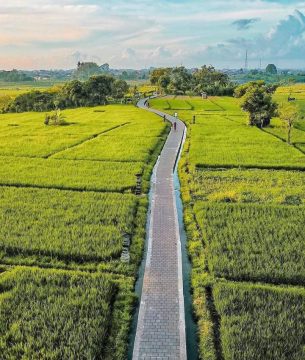
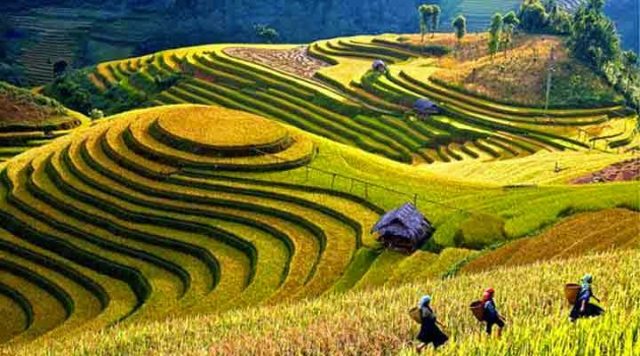
This cultural heritage includes not only terraced rice fields and irrigation networks but also forests that protect water sources, dams, canals, tunnels, villages, and temples that are part of the water management system.
One effort to preserve the Subak system includes the establishment of the Subak Museum in Tabanan Regency. The museum introduces the history, cultural values, and traditional Balinese irrigation system to the public and visiting tourists, while preserving the heritage still used by farmers today.
Related Links
Ancient Subak Agriculture System Under Existential Threat
Subak Agriculture on Wikipedia
Agriculture & Tourism: Friends or Foes?
Bali Rice Fields No Longer Available for Villa Construction?
Stay Informed on Bali Tourism-Related News: Subscribe to Bali Update